Material guide
Reordering: why the batch matters more than the quantity
Tiles are fired in batches, and every batch has a marginally different shade and a marginally different calibre – its actual size. Both are within the standard and both are visible as soon as two batches meet in the same room. That is why the decisive figure when buying tiles is not the price per square metre but whether your order comes from a single batch. Order too tightly and you later choose between a visible colour step and a new floor.
The planning tool opens after free sign-up.
By the floorplanning.app editorial team
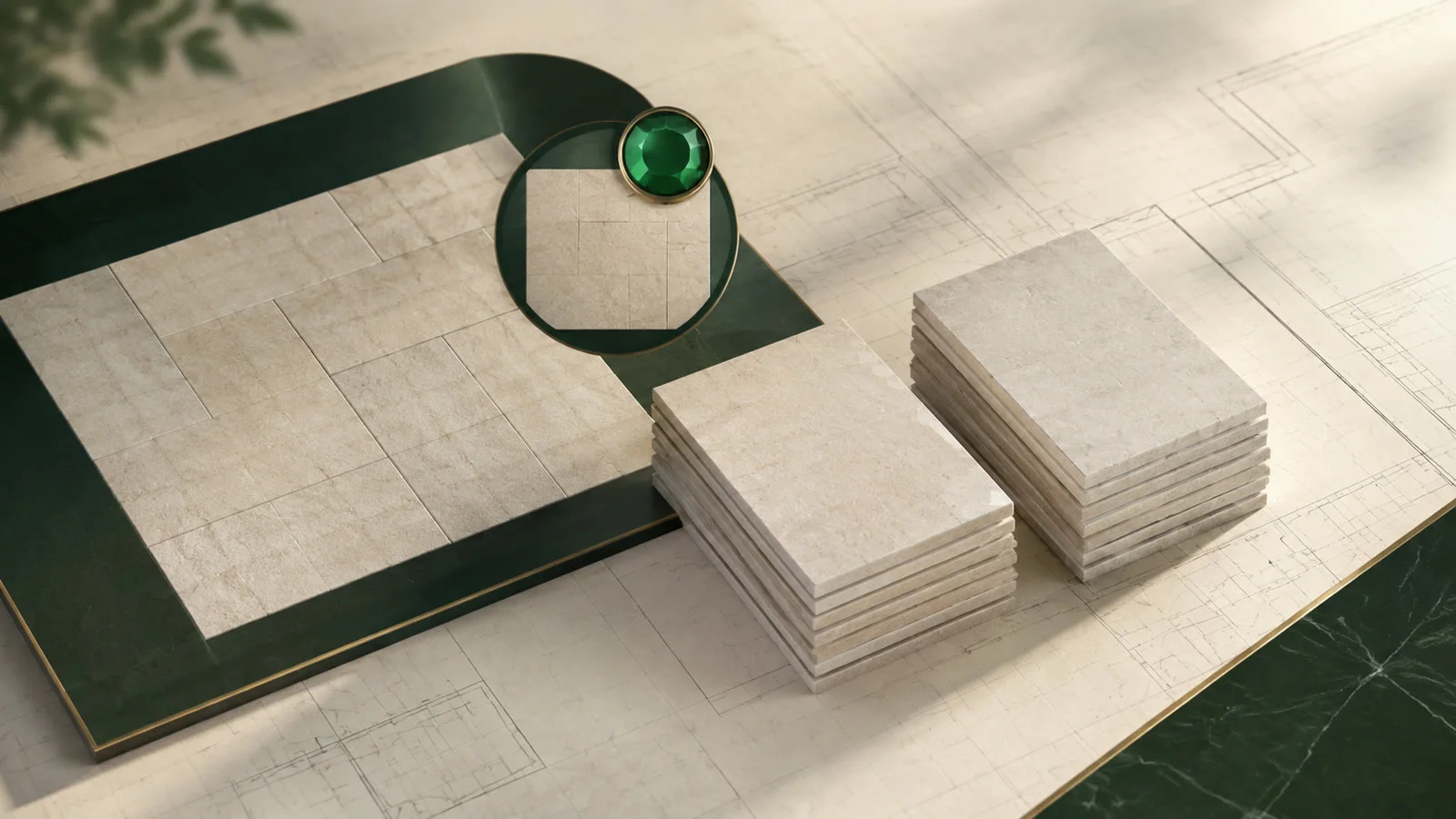
Shade and calibre are two problems
The colour difference shows as soon as the surface is lit – often only on the finished floor, once the work light is gone. Calibre is trickier: two millimetres of difference in actual size means the joint lines stop aligning after a few rows. Both deviations are permissible and both are irreparable once the tiles are bonded.

What matters in practice

Reserve is not waste, it is insurance
Our example bathroom (2.60 × 2.20 m, 30 × 60 in half bond) needs 38 tiles, 42 with an 8% reserve. Those four tiles are the difference between "I can repair it" and "I have to redo it". Always order the reserve with the initial order – not because you will definitely need it, but because it will not be available from the same batch later.
What to note when buying
Every box carries a batch or series number, a calibre and a shade code. Photograph one label and file it with the project – that takes ten seconds and saves the reorder later. Also check on delivery whether all pallets really carry the same batch; mixed deliveries are not uncommon and can only be rejected before laying.
If it does end up being two batches
Sometimes it is unavoidable – then the rule is: do not separate by room, mix within one area. Always open several boxes at once and lay alternately. An evenly distributed difference reads as texture, a block-wise one as a fault. Alternatively the second batch gets its own room with its own dividing joint at the door.
What the box says and why it matters
Batch number, calibre and shade code are the three details that decide a later repair. They cost you ten seconds at purchase and may save your floor.
- Shade and calibre may permissibly differ between batches
- The reserve belongs in the initial order, not in a top-up
- On delivery, check that all pallets carry the same batch
- Never separate two batches room by room – mix them
How to order properly
1. Calculate demand
Count cuts from the floor plan instead of estimating square metres.
2. Add the reserve
Add 5–10% and order everything in one go.
3. Document the batch
Photograph the label and store a few whole tiles.
Examples from the tool
This is what it looks like planned out
The numbers above do not come from a spreadsheet but from a real layout. You can open these example projects directly – floor plan, laying plan and material list, exactly as the tool outputs them.

Three-room flat, one grid
Six rooms, eleven walls, five doorways – and a single herringbone grid running through every opening. Material is calculated for the whole flat at once.
- 63.79 m² across 6 rooms
- 90 × 30 herringbone, one grid
- 334 planks · 199 cuts

Terrace on pedestals
L-shaped terrace with a planting bed cut out: slab grid, slope and every support point – including the pedestal parts list.
- 20.78 m² · 60 × 60 · 4 mm joint
- 79 slabs incl. 8% reserve
- 97 pedestals · 1.5% slope
Opens the read-only client view of a share – the same one you create for your own projects with Premium.
Common questions
How much reserve should you order?
Five to ten percent above the calculated demand, more with patterns and many cutouts. More important than the percentage is that the reserve comes from the same batch – which is why it belongs in the initial order, not in a later top-up.
Can I reorder tiles from a different batch?
Technically yes, visually risky. Shade and calibre deviate within the standard, and the difference is visible in the finished floor. If you must, mix the new batch evenly into the old one rather than covering one area with it.
What is tile calibre?
The actual fired dimension within an allowed tolerance. A "60 × 60" can really measure 59.8 or 60.1 cm. Within one batch the calibre is identical; between two batches it can differ – and then the joints drift apart.
How many tiles should I keep for later repairs?
A handful of whole tiles per room, stored dry, with the batch label alongside. That covers the typical damage – a dropped pot, a drill hole in the wrong place. A full box is better if you bought a special format or a series with short availability.
Read on
- Calculate tile material demandCalculate tile quantities accurately, including full tiles, cuts, waste, and reserve, and get a reliable material list for purchasing.
- The 10% rule is wrong: 500 rooms analysedWe ran 500 floor plans through our laying engine. Result: real material surplus ranges from under 2% to over 58%. Method, tables and raw data to…
- Reusing offcuts: is it worth it?Offcuts save a median of 5.5 percentage points of material – but exactly zero tiles in 143 of 500 rooms. When sorting and re-cutting actually pays…
Determine demand including reserve in one go
Enter room and format, set the reserve and read the total for a single order.
The planning tool opens after free sign-up.